


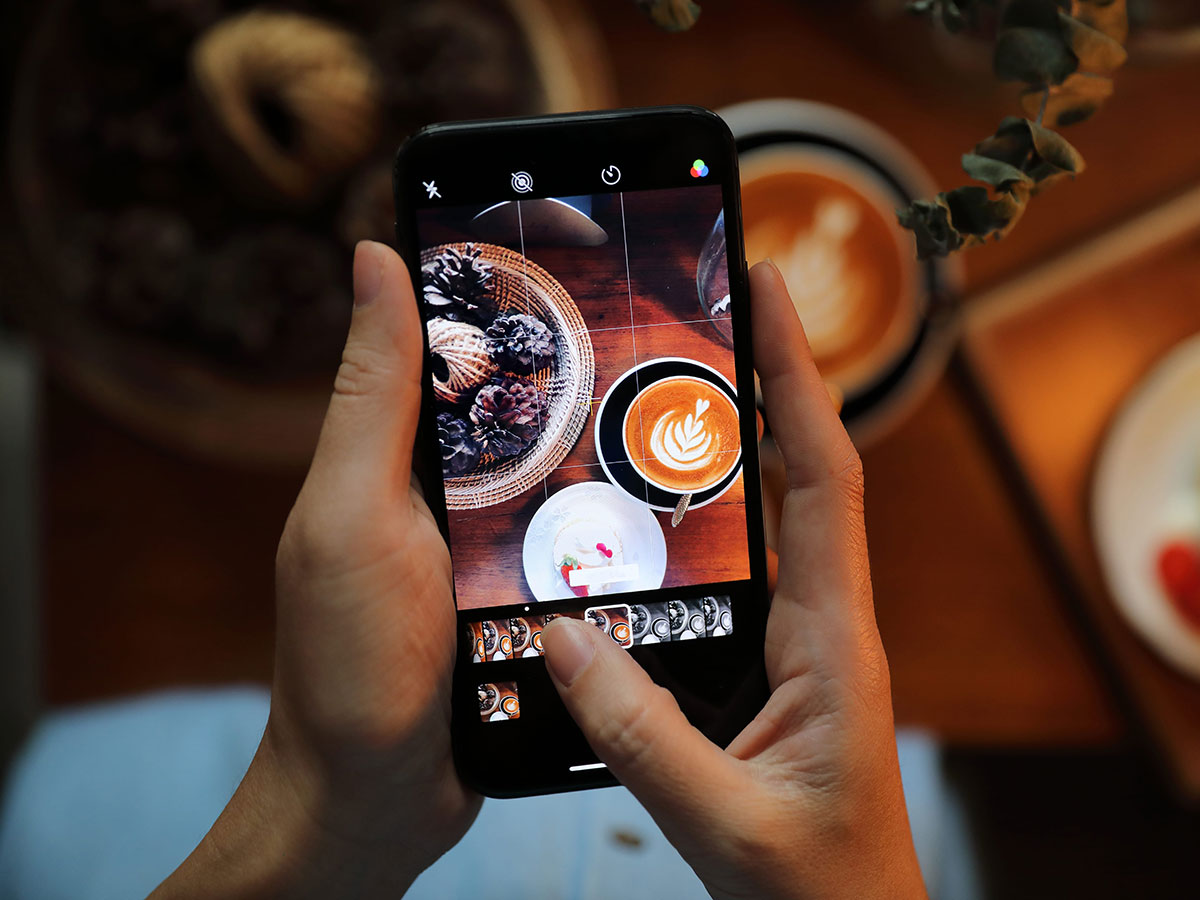
Photography helps cafés present their food and drink offering online. Photographs of a freshly prepared espresso, a cappuccino finished with latte art or a selection of pastries can highlight the details and presentation of each product. Images of the café itself also help people who have never visited get a sense of the space and its atmosphere.
Food photography in cafés requires particular care, especially when photographing drinks that change appearance shortly after preparation. Lighting, composition and framing all affect the final image, but timing and the way the subject is presented are equally important.
Choosing the Right Photos for Your Café
Before arranging a photoshoot, it is worth deciding which products and features of the café you want to highlight. A photograph focusing on espresso crema calls for a different approach from one intended to show the counter or seating area.
To build a collection of images suitable for different online channels, consider photographing:
- Coffee and other drinks, from espresso to cappuccino, focusing on how they are presented.
- Baked goods and pastries, showing portion sizes, textures and the characteristics of the products available.
- The counter and café interior, highlighting the layout and distinctive features of the venue.
- Preparation and service, capturing moments such as espresso extraction or a barista creating latte art.
The photographs should accurately reflect what customers can expect to find. Cups, saucers and other items shown in the images should also be consistent with those normally used during service.
Photographing Espresso and Cappuccino
Timing is particularly important in coffee photography. Espresso crema, for example, begins to change appearance within minutes of extraction. Having the cup, background and lighting ready beforehand allows you to photograph the espresso as soon as it is served, while its visual characteristics are still clearly defined.
To highlight the crema, shooting from a slightly elevated angle allows you to capture its surface while still showing the shape of the cup. A side angle may work better when you want to include the saucer, counter or other elements associated with the service.
When photographing a cappuccino, the best angle depends on what you want to emphasise. Latte art is particularly well suited to overhead photography, which captures the entire design. If the aim is to show the drink as a whole, a lower angle can bring the cup and its surroundings into the composition.
Reflections from glossy surfaces also need attention. Cups, teaspoons and metal coffee equipment can reflect light directly into the camera, creating bright areas that distract from the subject. Sometimes, simply adjusting the position of the cup or camera is enough to improve the photograph.
Lighting and Camera Angles in Food Photography
Lighting helps bring out colours, shapes and textures. Side lighting, for example, can highlight the surface of a cappuccino or the layers of a croissant, while very strong frontal lighting can make these details appear flat.
Inside a café, a window can provide a useful source of natural light. Ideally, choose a position where the light is diffused rather than falling directly onto the subject, as strong sunlight can create harsh shadows and excessive contrast.
Pay attention to the lighting already installed in the café, too. Combining light sources with different colour temperatures can distort the colours of drinks and make white cups appear discoloured. Before taking the photograph, check that the colours shown on the screen are as close as possible to those of the actual products.
Composition and Product Presentation
When photographing coffee and pastries, there is no need to fill every part of the frame with objects. The composition should make the main product immediately recognisable, with the background and other elements included only when they contribute to its presentation.
An espresso can be photographed directly on the counter, while a breakfast setting might include a croissant or another item available in the café. In both cases, the arrangement should make it clear which products are being presented.
The background also plays an important role. Strong colours or busy patterns can draw attention away from the product, while a simpler background makes it easier to focus on the subject. Before taking the shot, check the entire frame and remove packaging, utensils or other objects that do not belong in the photograph.
The distance between the camera and the subject also determines what the image communicates. Close-up shots are useful for showing espresso crema, latte art or the texture of a pastry, while wider shots allow the product to be presented alongside the elements used during service.
Using both approaches provides a more varied collection of photographs, suitable for highlighting different aspects of the café's offering.
Photographing Your Café Interior
Alongside product photography, it is important to have images that show the café itself. The counter, tables, seating, lighting and interior details help potential customers understand what the venue looks like before visiting.
When photographing café interiors, choose camera angles that clearly show how the space is arranged. A shot taken too close to the subject may hide the layout, while an excessively wide-angle lens can distort proportions and make the interior appear larger than it really is.
Before taking photographs, make sure tables and counters are tidy, paying attention to any objects visible in the background. The images should still represent the café as it normally looks, without changes that could give customers a misleading impression.
As well as general views, photographs of distinctive details can be useful, such as the coffee counter, a dedicated drinks preparation area or particular features of the interior design. If customers or staff members are recognisable in the photographs, make sure you have the necessary permission before publishing their images.
Photos for Instagram, Websites and Google Business Profile
The intended platform should influence which photographs you select. An image that works well for presenting a drink on Instagram may not be the most suitable choice for the homepage of a website or a Google Business Profile.
On Instagram, close-up shots of espresso, cappuccino and pastries can highlight details and preparation techniques. For the website, product photographs can be combined with wider images showing the café's interior and distinctive features.
On Google Business Profile, photographs should help users recognise the café and understand what it offers. Up-to-date images of the exterior, interior, counter and available products are therefore particularly useful.
Planning photographs with their intended uses in mind also makes it easier to capture both horizontal and vertical images. This reduces the need for cropping later, which could remove important details from the composition.
Taking Café Photos with a Smartphone
A professional camera is not always necessary to take good photographs of coffee, drinks and café interiors. A modern smartphone, used with attention to lighting and composition, can be enough to create images for the venue's online channels.
Before taking a photograph, clean the camera lens, select the focus point and check the exposure. The camera grid can help keep the lines of the counter straight and position the different elements within the frame.
A smartphone's built-in flash is generally not ideal for photographing cups and drinks, as it can create strong reflections. When the available lighting allows, moving the subject or changing your position relative to the light source is often a better option.
Photo editing also requires a measured approach. Adjusting brightness, contrast and white balance can correct some limitations of the original shot, but heavy filters risk changing the products' actual appearance. The aim is to produce a well-finished image without altering the colours or characteristics of the drinks.
For those wishing to develop these skills, Portioli Academy offers a Coffee Photography course dedicated to using smartphones to photograph café products and interiors. The course covers composition, framing, lighting and post-production, with particular attention to creating images for social media.
As part of everyday café operations, it can be useful to set aside specific moments for photography, preparing products and spaces in advance. Regularly updating the image collection also ensures that photographs are available for online use, without having to arrange a new photoshoot for every post.
FAQ
How Should You Photograph a Cappuccino for Social Media?
Before taking the photograph, make sure the cup is clean, the saucer is neatly positioned and the drink is well presented. Take several shots with slight variations in composition, then choose the one that works best for your post.
What Photos Should a Café Upload to Its Google Business Profile?
It is useful to publish up-to-date photographs of the exterior, interior, counter and main products on offer. Images should be sharp, well lit and accurately reflect the café and what it serves.
Do You Need a Professional Camera for Food Photography?
Not necessarily. A smartphone can be enough to photograph coffee, cappuccinos and baked goods. Good lighting, appropriate framing and sharp focus are all important for achieving high-quality results.
Related articles



Portioli Express
Home and office shopping
Experience authentic Italian espresso right at home with our premium blends in a variety of formats.
Go to the shop