






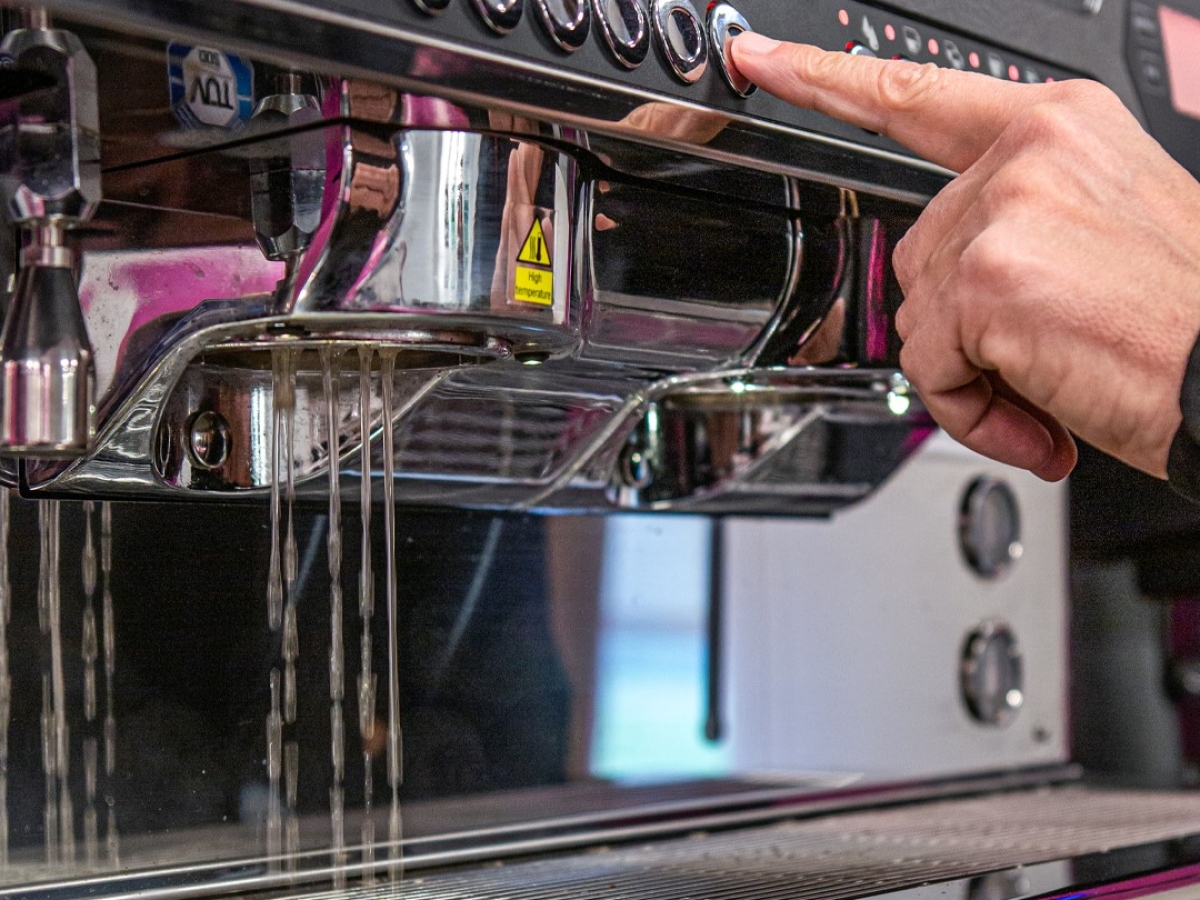
A professional coffee machine is subjected to intense daily use: consecutive extractions, steam use, hot water, service peaks, shift changes and repeated cleaning routines. It is one of the central tools behind the counter, and every variation in its operation quickly affects the rhythm of service.
When performance is not stable, the issue immediately appears during service: espresso requires more adjustments, preparation times become longer and the barista has to manually compensate for issues that should normally remain under control. Even a small variation can affect consistency from one preparation to the next.
For this reason, it is useful to recognize the most frequent signs that may indicate professional coffee machine problems. Some depend on daily adjustments, others on cleaning, while others require technical assistance. The key is understanding the machine’s behaviour before the anomaly becomes an operational stop.
1. Slow or Irregular Dispensing
One of the first signs to observe is the way coffee flows into the cup. Dispensing may become too slow, start with difficulty, proceed drop by drop or differ between the two spouts of the filter holder.
When a professional coffee machine does not dispense correctly, the cause should not immediately be associated with a technical fault. In many cases, the issue often originates before the brewing group: a grind that is too fine, an incorrect dose, uneven coffee distribution in the filter or inconsistent tamping can significantly affect espresso flow.
Cleaning also has a direct impact. Filters, filter holders and shower screens, if not cleaned regularly, can retain coffee residues and obstruct the correct passage of water. The barista notices this because the flow changes even though the blend has not been changed.
Before intervening on the machine itself, it is useful to proceed step by step:
- check whether the issue concerns one group only or all groups;
- verify grind size and dose;
- observe coffee distribution in the filter;
- clean filters, filter holders and shower screens;
- compare dispensing behaviour during different moments of the day.
If the irregularity remains after these checks, technical assistance should be contacted. Proper coffee machine maintenance helps identify anomalies early and reduces the risk of significant interruptions during service.
2. When Espresso Changes Throughout the Day
A common and often underestimated issue is espresso changing throughout the day. The crema may become lighter or less compact, the body may feel weaker, the flavour less defined or the extraction time more difficult to control.
In these cases, speaking only about “espresso with little crema” is reductive. The important point is understanding what has changed in the process: grinder adjustment, blend management, group cleaning or the way operators work during peak service periods.
Espresso that changes during the day may depend on several factors:
- grinder adjustment not suited to counter conditions;
- coffee left too long in the hopper;
- inconsistent dosing between operators;
- groups not cleaned correctly;
- cups, filters or filter holders used inconsistently during busy periods.
Product storage also has an impact. If coffee beans remain exposed to air, light, heat or humidity, they gradually lose aromatic intensity and clarity. The professional coffee machine may work correctly, but the espresso may still appear less structured.
For this reason, when espresso frequently changes appearance or behaviour, it is useful to avoid rushed conclusions. Before attributing the issue to the machine, it is better to check whether all the steps before extraction are managed with the same level of attention.
3. Unstable Temperature
The professional coffee machine temperature directly affects espresso balance. If coffee reaches the cup too cold, it may feel weak, less persistent and less pleasant to drink. If it is too hot, it may lose aromatic finesse and create a harsher taste in the cup.
Temperature, however, does not depend only on the group. Machine warm-up, proper cup warming, service rhythm and the overall condition of the equipment also play an important role. During busy periods, when espresso, hot water and steam are used continuously, any irregularities become more evident.
A common mistake is noticing the problem only after a customer complaint. In reality, variations should be monitored during service: at opening time, after the first morning rush and during the busiest periods of the day.
If one group dispenses differently from the others, or if the perceived temperature changes without an obvious reason, checks should become more accurate. Coffee machine pressure may also provide useful indications, but it should always be interpreted together with other signals rather than as an isolated value.
The barista can act on the aspects that belong to the daily routine: correct machine start-up, cups kept at the proper temperature, clean groups and attention to differences between one extraction and another. Technical adjustments and internal checks, however, should be handled by qualified assistance.
4. Weak Steam and Difficult Milk Frothing
The steam wand is one of the most heavily used parts of a professional coffee machine, especially in venues that prepare large numbers of cappuccinos, macchiatos and milk-based drinks.
When steam loses strength or becomes inconsistent, the issue is immediately noticeable: milk becomes more difficult to froth, the foam becomes coarse, preparation times become longer and the result changes from one drink to another.
Weak steam may depend on a technical issue, but the first check almost always concerns cleaning. Milk residues on the steam wand or inside the steam holes can compromise hygiene and reduce steam efficiency at the same time. Purging after every use is not an optional step: it helps keep the steam wand clean and ready for the next preparation.
Here too, the issue should be understood within the rhythm of daily service. If the steam wand works correctly at the beginning of the day and loses efficiency during busy periods, several factors may be involved: irregular pressure, continuous steam use, rushed cleaning or inconsistent procedures between operators.
For the barista, daily checks should include:
- purging before and after use;
- external cleaning of the steam wand;
- checking the steam holes;
- monitoring steam consistency;
- reporting recurring drops in performance.
When milk becomes difficult to froth without changes in technique or in the product used, the machine is communicating something. Ignoring it means weakening an important part of the service workflow.
5. Leaks, Unusual Noises and Signs of Wear
Water leaks, continuous dripping, unusual noises or filter holders that become difficult to lock into place are not minor inconveniences to postpone. They may indicate worn gaskets, components under stress or coffee machine maintenance no longer aligned with the workload of the venue.
In a professional environment, the coffee machine should not be checked only when it stops working. Many issues appear progressively: first a small slowdown, then less regular dispensing and finally the risk of a service interruption.
Limescale in coffee machine systems also requires attention because it can affect equipment performance and dispensing consistency. Its management depends on several factors: water hardness, work volumes, frequency of use and scheduled maintenance. For this reason, not all venues have the same needs.
When leaks or unusual noises appear, it is useful to collect precise information: when the problem occurs, which area of the machine it comes from, whether it affects a specific group and whether it worsens during busy periods. These are simple details, but they help technicians intervene more accurately.
The barista can monitor what emerges during daily use of the machine: cleaning, visible anomalies, changes in noise or variations in dispensing behaviour. Internal checks and repairs, however, should always be entrusted to qualified personnel.
Daily Cleaning and Checks for the Coffee Machine
Coffee machine cleaning should not be treated as an activity reserved only for the end of the day. It directly affects extraction consistency, workflow management and the perceived quality of the espresso served at the counter.
A clean machine makes it easier to understand coffee behaviour. It does not eliminate every possible anomaly, but it reduces the variables that may alter extraction: residues in filters, coffee oils on surfaces, clogged steam wands or groups that are not perfectly clean.
An effective routine should include:
- cleaning groups, filters and filter holders;
- checking the steam wand;
- regular purging;
- checking dispensing at the beginning of service;
- attention to noises, leaks and sudden changes;
- communication between operators regarding detected issues;
- scheduled maintenance carried out by qualified technicians.
The benefit goes beyond the machine itself. When procedures are clear, staff work with fewer improvised corrections, identify anomalies earlier and maintain a more organised service even during peak periods.
An Efficient Coffee Machine Supports the Barista’s Work
A professional coffee machine is a technical tool, but its performance depends on how it is integrated into daily operations. Good equipment alone is not enough if grinding, cleaning, coffee storage and maintenance are not managed with consistency and method.
Recognising espresso extraction problems early makes it possible to intervene before customers notice a clear decline in quality. An irregular flow, less compact crema, weak steam or unstable temperature are all signs that should be checked methodically rather than simply adjusted during service.
In bar service, consistency comes from repeated actions carried out carefully: checking, cleaning, adjusting and reporting. It is through this combination of routines that the machine truly expresses its value and allows the blend to reach the customer in the best possible conditions.
Torrefazione Portioli supports bar professionals with an approach that combines product, equipment and technical assistance: from blend selection to the supply of the professional coffee machine, including technical support and maintenance. An approach designed to help every venue work with greater consistency and maintain consistent espresso quality over time.
FAQ
Why does a professional coffee machine dispense slowly?
Slow dispensing may depend on a grind that is too fine, an incorrect dose, uneven tamping or residues in filters and shower screens. If the professional coffee machine still does not dispense correctly after routine checks, a technical inspection is recommended.
How can you understand whether the problem comes from the machine or the grinder?
It is important to observe whether the anomaly affects all groups or only certain preparations. In cases of espresso extraction problems, grind size, dose and cleaning should be checked before assuming a machine fault.
Why does espresso at the bar come out without crema?
Espresso with little crema may depend on coffee that has not been stored correctly, unsuitable grind size, imprecise dosing, dirty groups or unstable temperature.
How often should coffee machine maintenance be carried out?
Coffee machine maintenance depends on workload, machine type and water conditions. Scheduling periodic checks before faults appear helps maintain operational consistency.
Can limescale affect espresso?
Yes. Limescale in coffee machine systems can compromise the correct operation of the equipment and affect extraction consistency. Water management and maintenance should therefore be monitored carefully.
Related articles
Portioli Express
Home and office shopping
Experience authentic Italian espresso right at home with our premium blends in a variety of formats.
Go to the shop