






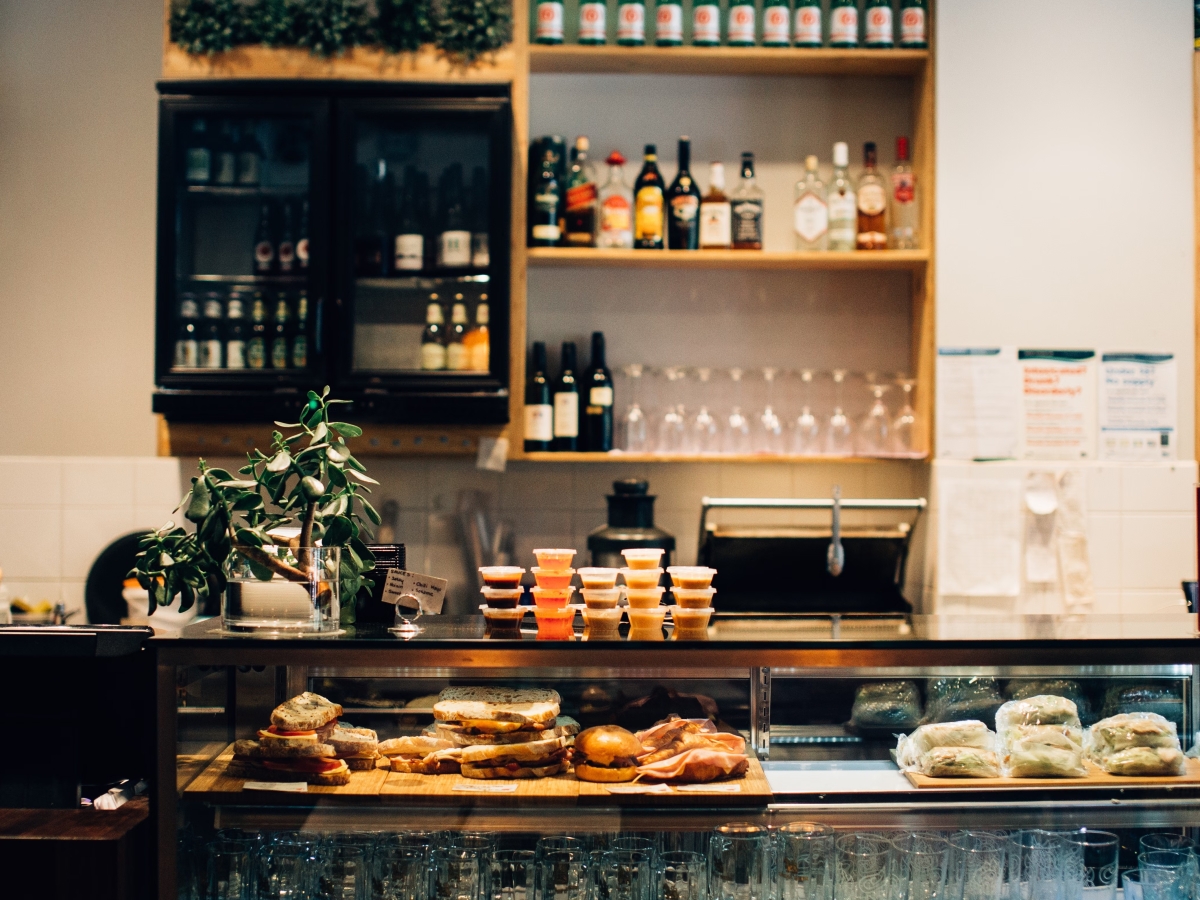
A well-planned café lunch service can create more sales opportunities throughout the day, but it requires a different approach from breakfast or regular coffee service. Customers have limited time, want to understand immediately what they can order and expect a complete meal without long waits. For the café owner, meanwhile, lunchtime needs to generate a healthy margin without excessively increasing purchasing, preparation and food waste.
Building an effective offer means choosing a manageable range of products that suits the space and equipment available, then making it easy to prepare, serve and sell.
Start with the Customers Who Visit Your Café
Before defining the menu, it is useful to observe who comes into the café between 12 and 2 pm. A business close to offices and professional practices may attract people looking for a complete but quick meal. In a shopping area, passing customers may be more common, while cafés near schools and universities may need to pay greater attention to price, convenience and takeaway options.
Peak days and times can vary too. Some cafés receive almost all their lunchtime orders within less than an hour, while others serve customers across a much longer period. Understanding these patterns helps determine how many options to keep available, which items can be prepared in advance and which should be finished to order.
Recurring requests also provide useful information. If many customers ask for a vegetarian option, a lighter dish or something they can take away, it may be more effective to introduce one targeted item and monitor its sales for a few weeks rather than immediately expanding the entire menu.
Café Lunch Menu: A Small Selection with a Clear Purpose
When deciding what to serve for lunch at a café the temptation is often to increase the number of choices. However, a very extensive menu requires more ingredients, more storage space and more complex stock and shelf-life management. When the range becomes too broad, maintaining freshness and consistency becomes more difficult.
A simple cafe lunch menu can be built around a limited number of products. Sandwiches, focaccias and toasties meet the demand for speed; salads and cold dishes widen the choice and work particularly well during the warmer months; one or two more substantial dishes can satisfy customers looking for a complete café lunch.
Different formats, seasonal ingredients and a daily special can help keep the menu varied without constantly changing its structure. Regular customers still find something different to choose from, while the café can keep purchasing and preparation under control.
Choose Ingredients That Work Across Different Dishes
The best cafe lunch ideas start with what the premises can realistically support. Not every café has a fully equipped kitchen, dedicated staff or enough space to manage numerous preparations. For this reason, it is useful to design the menu around versatile ingredients.
Vegetables, cheeses, cured meats, grains, sauces and fresh ingredients can be combined across sandwiches, cold dishes and salads. The same principle applies to the bases of each dish: a focaccia can be displayed at the counter or served on a plate with a side, while the same grain can form the basis of several recipes simply by changing a few ingredients.
This approach reduces the number of products that need to be purchased and makes it easier to adjust quantities according to demand. The aim is not to use the same ingredients in every dish, but to avoid buying products that are used for only one menu item with uncertain sales.
Organise Preparation Before the Lunchtime Rush
During the lunchtime rush, service speed directly affects how many customers a café can handle. If every order involves different, unplanned steps, queues quickly form at the counter and the risk of mistakes increases. A significant part of the work should therefore be completed in advance.
Before service begins, ingredients can be portioned, stock levels checked and workstations organised according to the sequence of tasks required.
When several people are working, responsibilities should also be clearly assigned. The person taking orders needs to know what is available, how long each item takes and which substitutions are possible; the person preparing the food needs to receive complete information. In smaller cafés, where one person may perform several roles, the menu needs to be even more streamlined.
The organisation of lunch service should also protect the coffee service. Lunch orders should not block the counter or make it difficult to serve customers who simply come in for a coffee. Equipment, workflows and available space should therefore be planned with these different requirements in mind.
Café Lunch Offer: Calculate Costs and Prices Properly
To make a café lunch offer profitable, it is not enough to compare the selling price with the cost of the ingredients. Preparation time, packaging, energy use, unsold food and the workload required during service all need to be taken into account.
Even a dish made with inexpensive ingredients can become unprofitable if it requires numerous preparation steps or regularly creates waste. Conversely, an option with a slightly higher food cost may prove more sustainable when it is easy to manage and sells consistently.
Defined portions and repeatable recipes help control costs while maintaining consistent quality. Setting quantities, ingredients and serving methods for the main dishes allows staff to work accurately even during the busiest periods.
Lunch deals can also make the customer's choice easier and create a more predictable average spend. A dish, drink and coffee can be offered together while still allowing customers to order each item separately. However, the price of a meal deal should always be based on an accurate margin calculation rather than an automatic discount.
Present the Options Without Slowing Down the Decision
Customers visiting a cafe at lunchtime want to understand quickly what is available. Overly elaborate names, unclear descriptions or hard-to-find prices slow down the decision-making process and generate more questions at the counter.
The menu can be displayed on a board, a printed menu or a screen, as long as it is kept up to date and accurately reflects what the café can actually serve. Each item only needs a clear name, its main ingredients and the price. Any lunch deals should also be immediately recognisable.
The counter display completes the presentation. Ready-made items should be neatly arranged and accompanied by the necessary information. If a product is only available on certain days or while stocks last, making this clear helps avoid expectations that staff cannot meet.
Monitor Sales, Preparation Times and Unsold Food
After a few weeks, it is useful to review which products sell, on which days and how frequently. Unsold food is valuable information too: it may indicate excessive quantities, an item that does not suit the customer base or a presentation that is not working effectively.
Alongside sales, it is worth monitoring preparation times and requests for modifications. A frequently ordered dish that is difficult to manage could be simplified; a less popular option may need a different position on the menu or a clearer description. If it still fails to sell, keeping it simply to provide one more choice adds complexity without delivering a real benefit.
A profitable café lunch service depends on matching the offer to both customer demand and the café's operational capacity. A small number of carefully selected dishes, ingredients used efficiently and a well-organised service can help reduce waste and turn lunchtime into a stronger, more sustainable part of the business.
Related articles
































Portioli Express
Home and office shopping
Experience authentic Italian espresso right at home with our premium blends in a variety of formats.
Go to the shop